
From Business to Sustainability: Hailey’s Journey at the Technical University of Munich
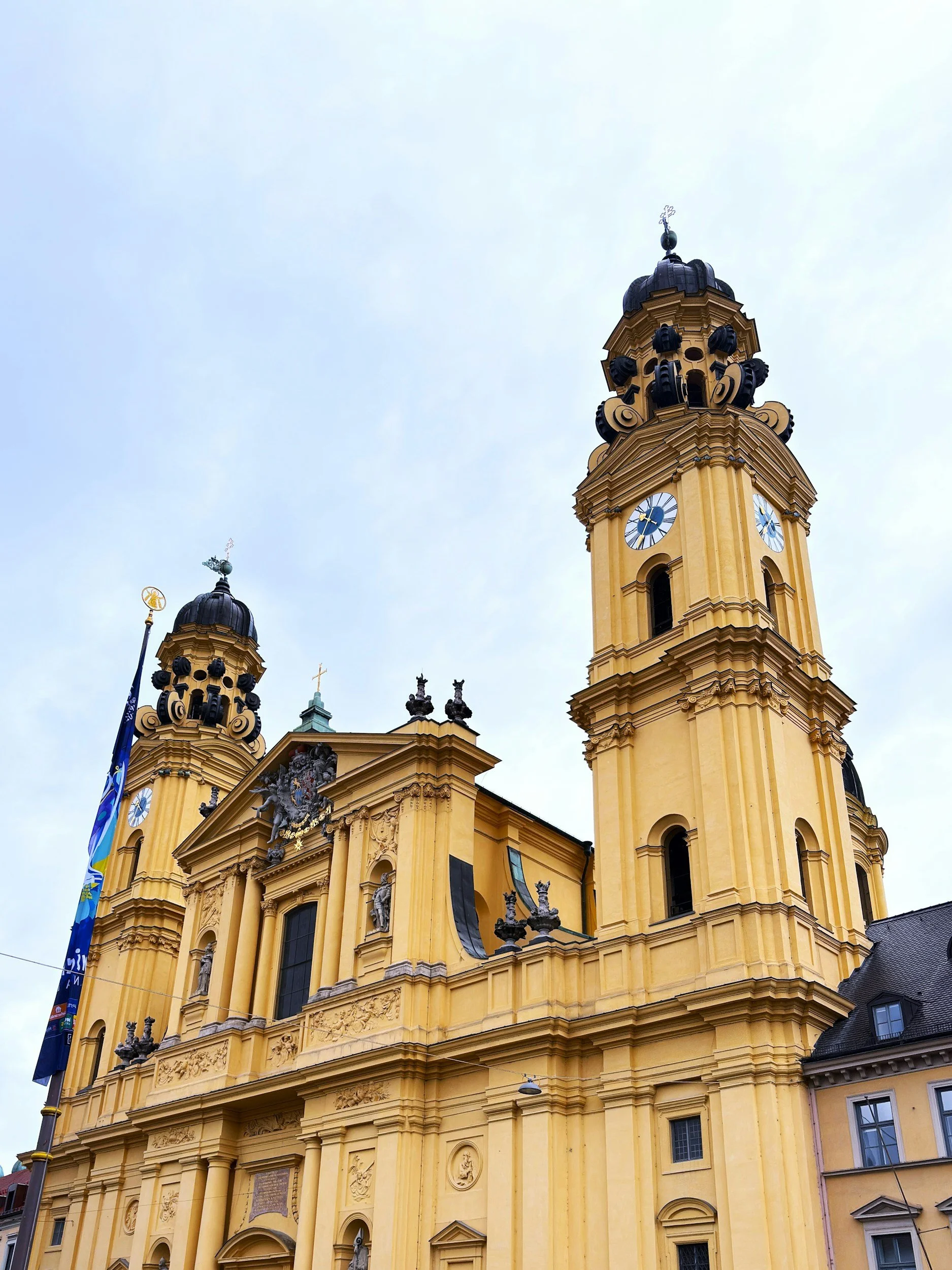
Theatine Church in Munich
Theatine Church in Munich symbolizes Hailey’s journey—from completing a year of business studies to pursuing a Bachelor’s degree in Sustainable Management and Technology at the Technical University of Munich (TUM), where she recalibrated her life rhythm and reconnected with sustainability and society.
At Soochow University in Taipei, Hailey’s university life once followed a straight and predictable track.
She majored in International Business and Trade, spending her days immersed in financial statements, economic models, and corporate strategies. It was a path that felt stable, familiar, and aligned with society’s typical expectations of a business education.
Yet beneath this sense of certainty, a growing awareness began to take shape. Questions around sustainability and environmental responsibility gradually surfaced. It wasn’t a sudden impulse, but a quiet realization—if growth is measured only by profit while ignoring environmental and social costs, can it truly be called progress?
After completing her first year of studies, Hailey made a pivotal decision: to step away from the conventional business track and move to Germany in pursuit of a sustainability-focused academic path. During this transition, she consulted with TaiGer Consultancy to clarify the differences between sustainability-related programs and to better understand where her interests truly lay. Eventually, she was admitted to the Bachelor of Science in Sustainable Management and Technology at the Technical University of Munich (TUM).
The program, housed within TUM’s School of Management, integrates management studies with engineering and natural sciences. Its goal is not to train students purely as managers or engineers, but to cultivate individuals capable of understanding how technological development, business decision-making, and sustainability challenges intersect. The curriculum spans business administration, economics, data analysis, engineering fundamentals, and natural sciences—all framed through the lens of sustainability.
For Hailey, this was not an escape from business education, but a reorientation: shifting from measuring performance alone to exploring how technology and organizations can respond responsibly to long-term environmental and social challenges.
From Expectations to Reality: The First Stop at TUM Straubing
Hailey began her studies at TUM Campus Straubing for Biotechnology and Sustainability, located in a rural area of Bavaria. This campus serves as one of TUM’s key hubs for sustainability, biotechnology, and circular economy research.
Before arriving, she expected early exposure to applied sustainability practices—such as carbon footprint analysis, sustainable supply chains, and technology-enabled transformation. However, the academic reality was more theory-driven than anticipated. Courses emphasized foundational knowledge, academic literature, and methodological frameworks.
While this structure is essential for building analytical depth and long-term research capability, it requires an adjustment for students seeking immediate practical application. Through this experience, Hailey came to understand an important reality of research-intensive universities: hands-on practice often emerges progressively through advanced coursework, research projects, and applied collaborations.
This realization helped her recalibrate expectations and better align herself with the academic rhythm of a top-tier research institution.
A Change of Pace: From Straubing to Munich

Quiet landscape of Germany
A quiet Bavarian landscape symbolizing the atmosphere of TUM Campus Straubing - contrasting with the dynamic city life that later drew to Hailey to Munich.
Life in Straubing moved slowly. Cycling through open fields and quiet streets felt peaceful, yet gradually isolating. The limited cultural activities and nightlife made her feel disconnected from the rhythm she needed.
About a year later, Hailey relocated to Munich, where she rediscovered a sense of vitality. Cinemas, exhibitions, lively streets, and cultural diversity reintroduced a dynamic pace to her daily life. This shift was more than geographical—it was a recalibration of how she connected sustainability with real social contexts.
She began to see sustainability not as an abstract academic concept, but as something that must live and breathe within urban life and human interaction.
From Theory to Practice: Sustainability Through Action
Among her most meaningful experiences were those grounded in real-world application. Hailey applied Life Cycle Assessment (LCA) methodologies learned in class to an agricultural project in Tanzania.
Using secondary data on soil carbon emissions and agricultural practices, she contributed to analytical reports that supported local farming initiatives. These reports were not academic exercises—they became practical tools that informed decision-making on the ground.
She also attended a cross-cultural communication program at Télécom Paris, where she learned how to translate complex technological and environmental concepts into language accessible to non-specialists. In Munich, she further contributed by working as an administrative assistant at a Chinese language school, facilitating communication between parents and teachers.
Together, these experiences shaped her identity as someone who bridges cultures, disciplines, and systems.
The Job Search Turning Point: From Silence to Opportunity
Entering the German job market was not easy.
Despite submitting numerous applications with self-written CVs and cover letters, Hailey received little response. The lack of feedback led to self-doubt and frustration.
Eventually, she realized the issue wasn’t effort—but positioning. With guidance from TaiGer Consultancy, she restructured her narrative, reframed her experiences, and aligned her application materials with what German employers truly value.
Within one week of submitting three tailored applications, she received two interview invitations and successfully secured an internship shortly afterward—supported by multiple rounds of interview preparation with TaiGer’s HR experts.
This breakthrough was not the result of a single document revision, but of long-term, structured guidance—from academic positioning to career storytelling—helping her become visible within Germany’s competitive labor market.

At TaiGer, our support doesn’t stop with university admission
We continue to guide our students as they enter the job market, helping them confidently showcase their strengths in interviews and significantly improving their chances of securing job offers.
The Reality of Studying Abroad: Patience in Everyday Life
Hailey’s life in Germany was far from a romanticized study-abroad fantasy. Bureaucracy became part of daily life. When moving into student housing, her mailbox key was broken, forcing her to retrieve letters using chopsticks. Repair requests took weeks.
Rather than becoming discouraged, she learned patience, adaptability, and humor in the face of imperfect systems—qualities that became essential to her growth abroad.
Conclusion: A Sustainability Journey Built on Adaptation
Hailey’s journey—from a business student to a sustainability-focused learner in Munich—is not a straight line, but a continuously evolving path shaped by reflection, resilience, and recalibration.
For her, sustainability is not a slogan. It is a lived practice—one that requires action, reflection, and the courage to adapt.
Ready to Start Your Own Sustainability Journey?
Are you also interested in sustainability and curious about learning from one of the world’s leading countries in this field—Germany?
Let us support you on your journey. At TaiGer, we help students identify the right academic pathways, clarify their goals, and take confident steps toward studying abroad and building an international career.
Contact us today for a free consultation, and let’s explore how you can turn your academic interests into real-world impact in Europe.
